When you buy through links on our articles, Future and its syndication partners may earn a commission.

Your first major opportunity to spot shooting stars and bright fireballs in 2026 arrives overnight tonight with the peak of the Quadrantid meteor shower, though only the brightest members may be visible, as the annual event crescendos in the bright light of a full moon.
The Quadrantid meteor shower is active from Dec. 26, 2025 to Jan. 16, 2026, with a narrow peak lasting roughly six hours that unfolds in the period preceding dawn on Jan. 4, according to EarthSky.org. The shower owes its brief peak to the near-perpendicular angle at which Earth smashes through the thin debris trail left by asteroid 2003 EH1. Shooting stars appear when shards of ancient comets and asteroids collide with Earth, burning up in a fiery display as they are overwhelmed by friction.
Quadrantid meteor showers are capable of producing impressive displays, with up to 200 shooting stars visible each hour under dark sky conditions around the peak. Unfortunately, the 2025-6 shower comes to a head in the light of a full moon, whose glare will wash out all but the brightest meteors. NASA predicts an hourly rate of just 10 meteors per hour on the night of the peak. The January full moon is often called the "Wolf Moon", in reference to the predators that have been heard howling at Earth's satellite during the scarcity of winter.
Meteors associated with the Quadrantid shower appear to come from a patch of sky close to the "handle" of the famous Big Dipper asterism in the constellation Ursa Major — a circumpolar constellation that never sets for stargazers in the Northern Hemisphere. As such, the shower is best viewed from locations north of 51 degrees latitude.
The shower gets its name from a constellation created by French astronomer Jerome Lalande in 1795, known as Quadrans Muralis, which occupies this space near the Big Dipper, according to NASA. The constellation, however, was not chosen as one of the 88 constellations formally recognized by the International Astronomical Union (IAU).
The radiant will rest low on the northern horizon after sunset, but soars high overhead during the pre-dawn peak-viewing hours. Quadrantid meteors can appear in any part of the sky, though it's best not to look exactly in the direction of the radiant, where the trails will be at their shortest.
Hoping to immortalize your view of the Quadrantids? Then be sure to check out our guide to photographing shooting stars and if you're looking to upgrade your equipment, see our picks of the best cameras and lenses for astrophotography. .
Editor's Note: If you capture an image of a Quadrantid meteor and want to share your astrophotography with Space.com's readers, then please send your photo(s), comments, and your name and location to [email protected].
latest_posts
- 1
 South African army arrive in crime hotspots to help tackle gangs
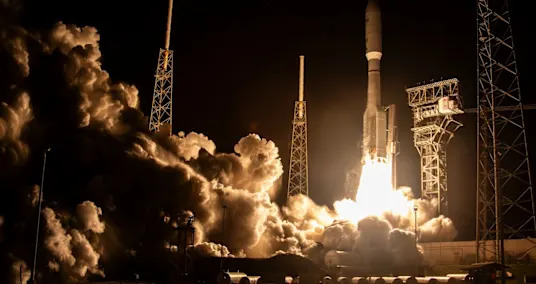
 - 2Watch Atlas V rocket launch its heaviest-ever payload early on April 4
- 3Parents who delay baby's first vaccines also likely to skip measles shots
- 4Find the Wonders of the Silk Street: Following the Antiquated Shipping lanes
- 5Farmers worry about rising cost of fertiliser




- Olivia Rodrigo announces 3rd album, 'You Seem Pretty Sad for a Girl So in Love,' set to debut in June
- Unpaid caregiving work can feel small and personal, but that doesn’t take away its ethical value
- The Most Important Crossroads in Olympic History
- The most effective method to Remain Ahead in the Most recent Advanced Patterns with a Web based Advertising Degree
- Zelensky confidant dismissed from further posts amid bribery scandal
- The Ursid meteor shower will be the last of the year, peaking just before Christmas: What to know and how to watch
- 3 astronauts settle into their new life in orbit | On the International Space Station this week Dec. 1-5, 2025
- Vote in favor of Your #1 Climbing boots Now
- Blue Origin's next space tourism flight will break new ground for people with disabilities